 04 282 8773
 info@thebrightuae.com

Blog
How to Maintain Your Water Tank Chiller for Long-Term Performance

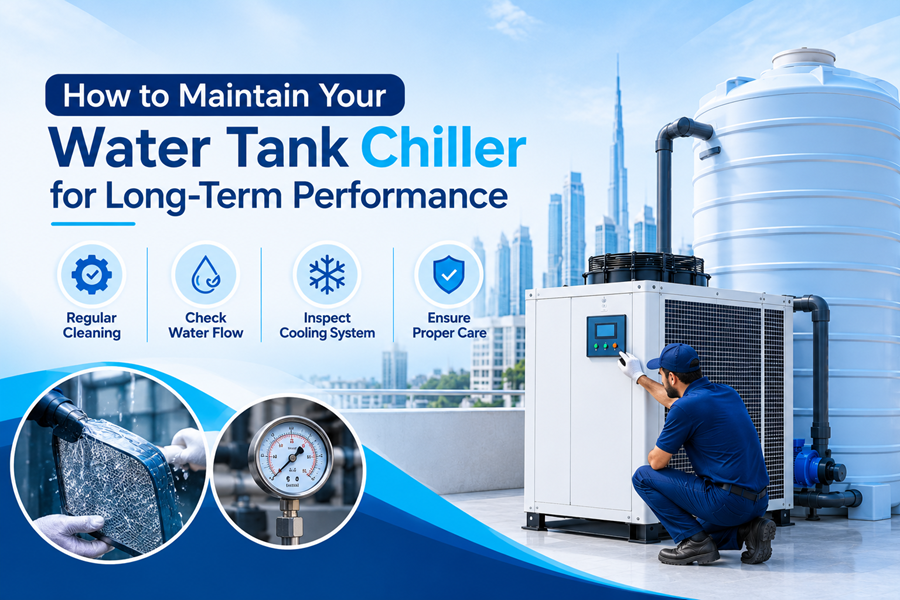
A water tank chiller is an important investment for homes, commercial buildings, offices, hotels, and industrial facilities, especially in the UAE, where temperatures can rise significantly during summer. It helps maintain comfortable water temperatures by cooling stored water and supporting a more reliable water supply.
However, installing a high-quality water tank chiller is only the first step. Regular maintenance is essential to keep the system operating efficiently, prevent unexpected breakdowns, and extend its service life.
Dust, high outdoor temperatures, restricted airflow, mineral deposits, and continuous operation can affect cooling performance over time. Without proper care, these issues may increase energy consumption and lead to expensive repairs.
In this guide, we explain practical water tank chiller maintenance tips to help you maintain reliable cooling performance throughout the year.
Why Is Regular Water Tank Chiller Maintenance Important?
A water tank chiller operates under different environmental conditions, particularly in hot regions such as Dubai, Sharjah, Abu Dhabi, and Al Ain. Regular servicing helps identify minor problems before they develop into major equipment failures.
Here are some important benefits of maintaining your water tank cooling system:
- Improved cooling efficiency: Clean components and proper airflow help the chiller operate effectively.
- Lower maintenance costs: Identifying leaks, blockages, and worn components early can help avoid expensive repairs.
- Longer equipment lifespan: Routine inspections help protect important components from unnecessary wear.
- Reliable performance: Proper maintenance reduces the risk of unexpected cooling interruptions.
- Better energy efficiency: A well-maintained system can avoid unnecessary energy consumption caused by restricted airflow or other operating problems.
1. Clean the Chiller Filters and Air Vents Regularly
Dust and dirt can accumulate around the air filters, vents, and cooling components of a water tank chiller. This is particularly common in the UAE because of dusty outdoor conditions.
Restricted airflow can affect heat exchange and make the cooling system work harder than necessary.
Maintenance tips:
- Inspect accessible air filters according to the manufacturer’s instructions.
- Clean or replace filters when required.
- Remove dust and debris from external ventilation openings.
- Make sure the air inlet and outlet areas are not blocked.
- Keep the surrounding installation area clean.
Always switch off and isolate the equipment before carrying out any cleaning permitted by the manufacturer. Internal cleaning should be handled by a qualified technician.
2. Check Water Flow and Pressure
Proper water circulation is essential for effective water tank cooling. If the water flow becomes restricted, the chiller may not cool the stored water as expected.
Blocked pipes, damaged connections, pump problems, or clogged filters can affect water circulation.
What should you check?
- Look for visible leaks around pipes and connections.
- Check whether the water pump is operating normally.
- Inspect accessible valves and pipe connections.
- Watch for unusual changes in water flow or pressure.
- Ask a technician to investigate repeated pressure fluctuations.
Maintaining proper water circulation helps your water tank chiller deliver consistent cooling performance.
3. Inspect the Cooling System and Condenser
The condenser and other heat-transfer components play an important role in removing heat from the cooling system. Dust, dirt, and debris can reduce their effectiveness.
This is especially important when a chiller is installed outdoors or on a rooftop.
Regularly check for:
- Dust accumulation around condenser surfaces.
- Blocked ventilation openings.
- Visible damage to external components.
- Signs of corrosion or unusual wear.
- Unusual operating sounds or vibration.
A qualified technician should inspect and clean internal cooling components when necessary. Avoid bending delicate fins or using high-pressure water unless the manufacturer specifically permits it.
4. Keep the Chiller Installation Area Clean and Well-Ventilated
The location of your water tank chiller can directly affect its performance.
Many water tank cooling systems are installed on rooftops or in outdoor service areas. These locations can expose equipment to dust, direct sunlight, debris, and high ambient temperatures.
For better operation:
- Keep the area around the chiller free from unnecessary objects.
- Maintain sufficient clearance around air intake and exhaust openings.
- Remove leaves, dust, and debris from the installation area.
- Check that rainwater or cleaning water does not collect around electrical components.
- Ensure the equipment is installed on a stable and suitable surface.
Good ventilation helps the cooling system release heat effectively.
5. Check for Water Leaks and Pipe Insulation Damage
Water leaks can reduce system efficiency and create unnecessary water wastage. Damaged pipe insulation can also allow unwanted heat to enter the circulating water.
Inspect visible pipework and connections for:
- Water dripping or damp patches.
- Loose joints and fittings.
- Cracked or damaged insulation.
- Signs of corrosion.
- Condensation or unusual moisture around connections.
Replace damaged insulation and arrange professional repairs for leaks. Do not ignore small leaks, as they may become more serious over time.
6. Monitor Temperature and Overall Cooling Performance
Monitoring the water temperature helps you identify changes in chiller performance.
If the water is not reaching the expected temperature, there may be an issue with the cooling system, water circulation, temperature settings, or installation conditions.
Keep track of:
- Normal operating water temperature.
- Cooling time and performance.
- Changes in energy consumption.
- Unusual alarms or error codes.
- Frequent starting and stopping of the system.
If the chiller struggles to maintain the required temperature, contact a qualified service technician for inspection rather than repeatedly adjusting the settings.
7. Schedule Professional Water Tank Chiller Servicing
Basic external cleaning and visual inspections are useful, but they cannot replace professional maintenance.
A trained technician can inspect the electrical connections, refrigerant circuit, compressor, condenser, pump, controls, and other important components.
Professional servicing may include:
- Checking refrigerant-system performance.
- Inspecting electrical connections and safety controls.
- Testing pump operation and water circulation.
- Cleaning condenser components where required.
- Checking temperature sensors and control settings.
- Identifying worn or damaged parts.
- Testing the complete system after servicing.
Follow the manufacturer’s recommended service intervals and arrange additional inspections if the system operates continuously or experiences performance problems.
Common Signs Your Water Tank Chiller Needs Maintenance
Recognising early warning signs can help prevent major equipment problems.
Watch for these common symptoms:
| Warning sign | Possible reason |
|---|---|
| Water is not cooling properly | Cooling-system or circulation issue |
| Unusual noise or vibration | Loose parts, pump, or compressor issue |
| Reduced airflow | Dusty filters or blocked ventilation |
| Water leakage | Damaged pipe or loose connection |
| Frequent system shutdowns | Electrical, sensor, or protection issue |
| Higher energy consumption | Reduced operating efficiency |
These symptoms can have different causes. A professional inspection is the safest way to identify the actual problem.
Water Tank Chiller Maintenance Checklist
Use this simple checklist to keep track of routine care.
Regular visual checks
- Inspect the chiller exterior for dust and damage.
- Check for visible water leaks.
- Keep ventilation openings clear.
- Monitor water temperature and system operation.
Periodic maintenance
- Clean or replace filters as recommended.
- Inspect pipes, valves, and insulation.
- Check pump operation and water circulation.
- Inspect condenser and cooling components.
Professional servicing
- Inspect electrical connections and safety controls.
- Check refrigeration-system performance.
- Test sensors and operating controls.
- Review the overall cooling performance.
The exact maintenance frequency depends on the equipment model, installation environment, operating hours, and manufacturer’s recommendations.
Why Water Tank Chiller Maintenance Is Especially Important in the UAE
The UAE experiences high outdoor temperatures and dusty environmental conditions, particularly during summer. Rooftop installations can face additional exposure to direct sunlight and airborne dust.
These conditions make proper installation, ventilation, cleaning, and periodic servicing especially important.
For customers in Dubai, Sharjah, Abu Dhabi, and Al Ain, maintaining a water tank chiller can help support reliable cooling during demanding weather conditions.
Choosing a suitable chiller capacity for your tank size and cooling requirements is equally important. An incorrectly sized system may struggle to achieve the desired performance or operate inefficiently.
Choose the Right Water Tank Chiller for Reliable Cooling
Maintenance is important, but long-term performance also depends on selecting the right equipment from the beginning.
When choosing a water tank chiller, consider:
- Water tank capacity in gallons or litres.
- Required water temperature.
- Daily water consumption.
- Installation location and ventilation.
- Local outdoor temperature conditions.
- Equipment specifications and service requirements.
At Mazaya, customers can explore water cooling solutions designed for different tank capacities and cooling requirements.
If you are planning to install a new system or replace an existing unit, selecting the appropriate model can help support dependable performance and efficient operation.
Contact Mazaya to discuss your water tank cooling requirements and find a suitable solution.
Frequently Asked Questions (FAQs)
1. How often should a water tank chiller be serviced?
The servicing frequency depends on the model, usage, and installation conditions. Follow the manufacturer’s maintenance schedule. Systems operating continuously or in dusty outdoor environments may require more frequent inspections.
2. Why is my water tank chiller not cooling properly?
Common reasons include restricted airflow, dirty filters, poor water circulation, condenser problems, incorrect settings, or a refrigeration-system fault. A qualified technician can diagnose the issue.
3. Does dust affect water tank chiller performance?
Yes. Dust accumulation around filters, vents, and condenser surfaces can restrict airflow and reduce heat-transfer efficiency. Regular cleaning according to manufacturer instructions is important.
4. Can I clean my water tank chiller myself?
You can perform basic external cleaning and visual inspections if permitted by the manufacturer. Electrical components, refrigerant systems, and internal repairs should be handled by qualified professionals.
5. Does proper maintenance reduce electricity consumption?
It can help. Clean filters, unobstructed airflow, proper water circulation, and correctly operating components help the chiller work more efficiently.
6. How long does a water tank chiller last?
Its service life depends on product quality, installation, operating conditions, maintenance, and usage. Following the manufacturer’s guidelines and arranging timely servicing can help extend equipment life.
7. Is water tank chiller maintenance important during UAE summer?
Yes. High ambient temperatures and dusty conditions can place additional demands on outdoor cooling equipment. Inspecting ventilation, cleaning accessible components, and monitoring performance are particularly important during summer.
Final Thoughts
A water tank chiller is a valuable solution for maintaining comfortable stored-water temperatures, especially in the UAE’s hot climate. However, achieving reliable long-term performance requires more than simply installing the equipment.
Regular cleaning, proper airflow, checking water circulation, monitoring temperatures, and professional servicing can help improve efficiency and reduce the risk of unexpected breakdowns.
Whether you operate a residential, commercial, or industrial water tank cooling system, following a consistent maintenance routine is a practical way to protect your investment.
Looking for a suitable water tank chiller in the UAE? Contact Mazaya to discuss your cooling requirements and explore the right solution for your water tank.


